Tango
Tango connects music, dance and poetry in Argentina and Uruguay.
UNESCOThree short editorial studies. Follow each question into the source and continue with a learning route.
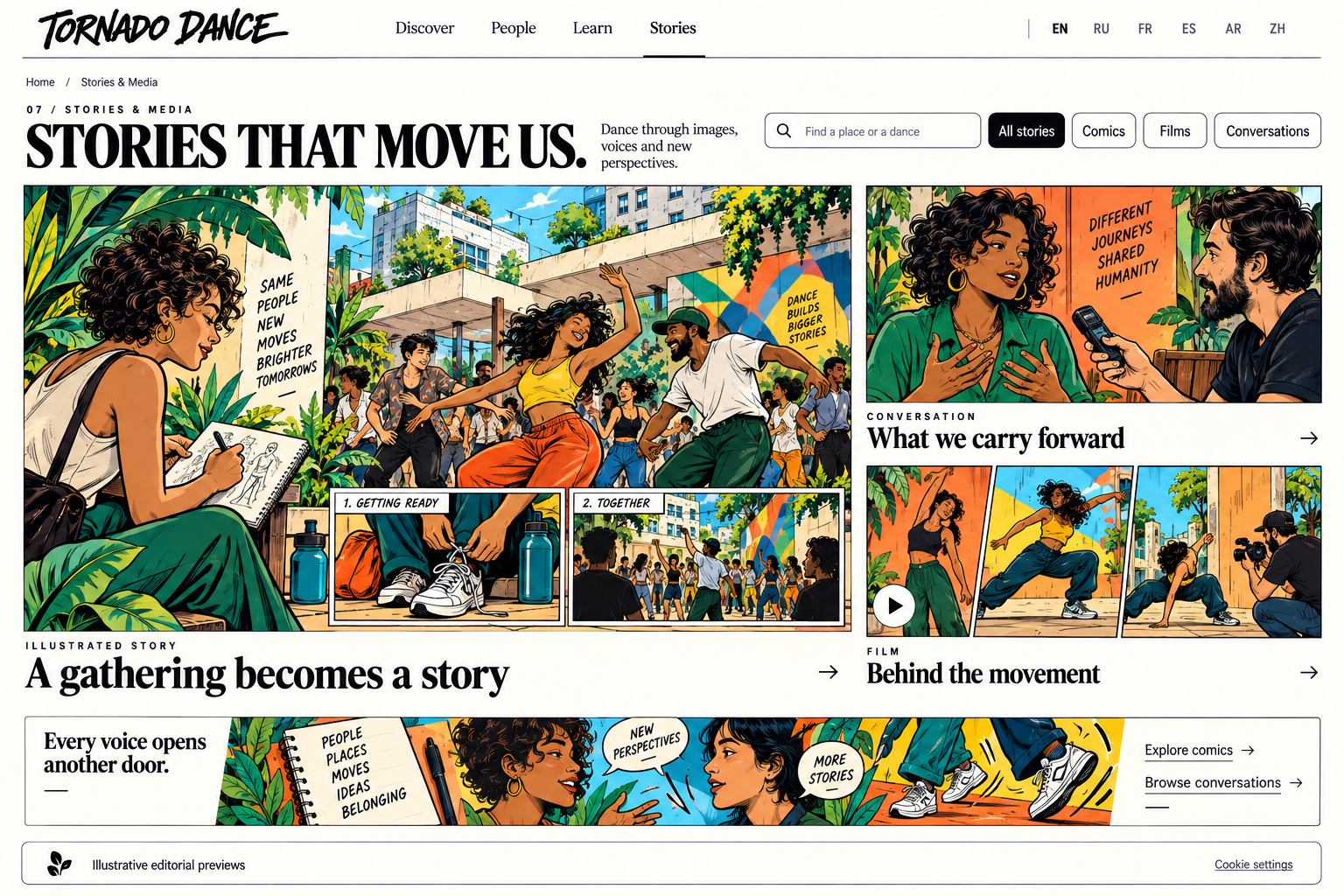
An editorial story needs a clear subject, a source and a point of view. A sequence of three images can show a setting, an encounter and a change without pretending to be a complete biography.
Open the original records below for documents and any media offered by their publishers. Links lead outside this local preview; access conditions and available languages belong to those publishers.
Tango connects music, dance and poetry in Argentina and Uruguay.
UNESCOFlamenco brings singing, dancing and musicianship together; Andalusia is its heartland.
UNESCOThe Afro-Brazilian capoeira circle combines movement, music and shared learning.
UNESCOGanggangsullae is a Korean communal singing-and-dancing tradition associated with seasonal celebrations.
UNESCOExplore historical dance manuals alongside etiquette texts and other documents.
Library of CongressBegin with the dance division’s own information about its collections and access.
New York Public LibraryA performance gives us a point of view. To investigate a practice, ask who gathers, how people learn and what the occasion means. Start with the UNESCO record on capoeira; distinguish its description from your own interpretation.
What sits outside the frame?
Read a dance manual as a document with an author, audience and date. Notice what the text explains and what it leaves unstated. A written instruction can guide questions without showing every detail of a lived encounter.
Can a page preserve movement?
Choose one dated event in an official biography. Separate the event from your explanation of why it mattered. Follow the people and collaborations around it, and write down what another source would need to clarify.
How do we read an artistic life?
Watch the UNESCO source film about Furyu-odori in Japan.
UNESCO · YouTube